
Testosterone Optimization for Women in new hampshire

What if feeling less energized, less motivated, or less connected to your sexuality is not simply the price of getting older?


Testosterone receptors are found throughout the female body—including the brain, muscles, bones, skin, cardiovascular system, adipose tissue, and reproductive tissues—suggesting that this hormone participates in a broad range of physiologic functions. The strongest clinical evidence for testosterone therapy in women remains its ability to improve sexual desire and other aspects of sexual function in appropriately selected women, but research into these wider effects is growing.
A 2026 study conducted by researchers at Brigham Young University examined outcomes among 332 women receiving testosterone replacement therapy.
Key findings included:
- 84.3% reported improvement in energy and fatigue.
- More than 65% reported improvement in depression, irritability, ability to experience pleasure, and sexual interest.
- 89.7% reported some degree of improvement in overall quality of life.
- Energy and mood were identified as meaningful benefits more frequently than sexual desire.
- Improvements in memory and concentration appeared to develop more gradually, becoming more evident after approximately four to six months of treatment.
- Among 120 women with paired laboratory testing, researchers also observed favorable changes in triglycerides, hemoglobin, testosterone, and sex hormone-binding globulin.
Citation: Elggren CW, Iverson CH, Morris MD, et al. Testosterone Replacement Therapy in Women Is Associated with Improved Symptom Burden and Favorable Biomarker Changes: A Retrospective Observational Study. Journal of Personalized Medicine. 2026;16(5):231.
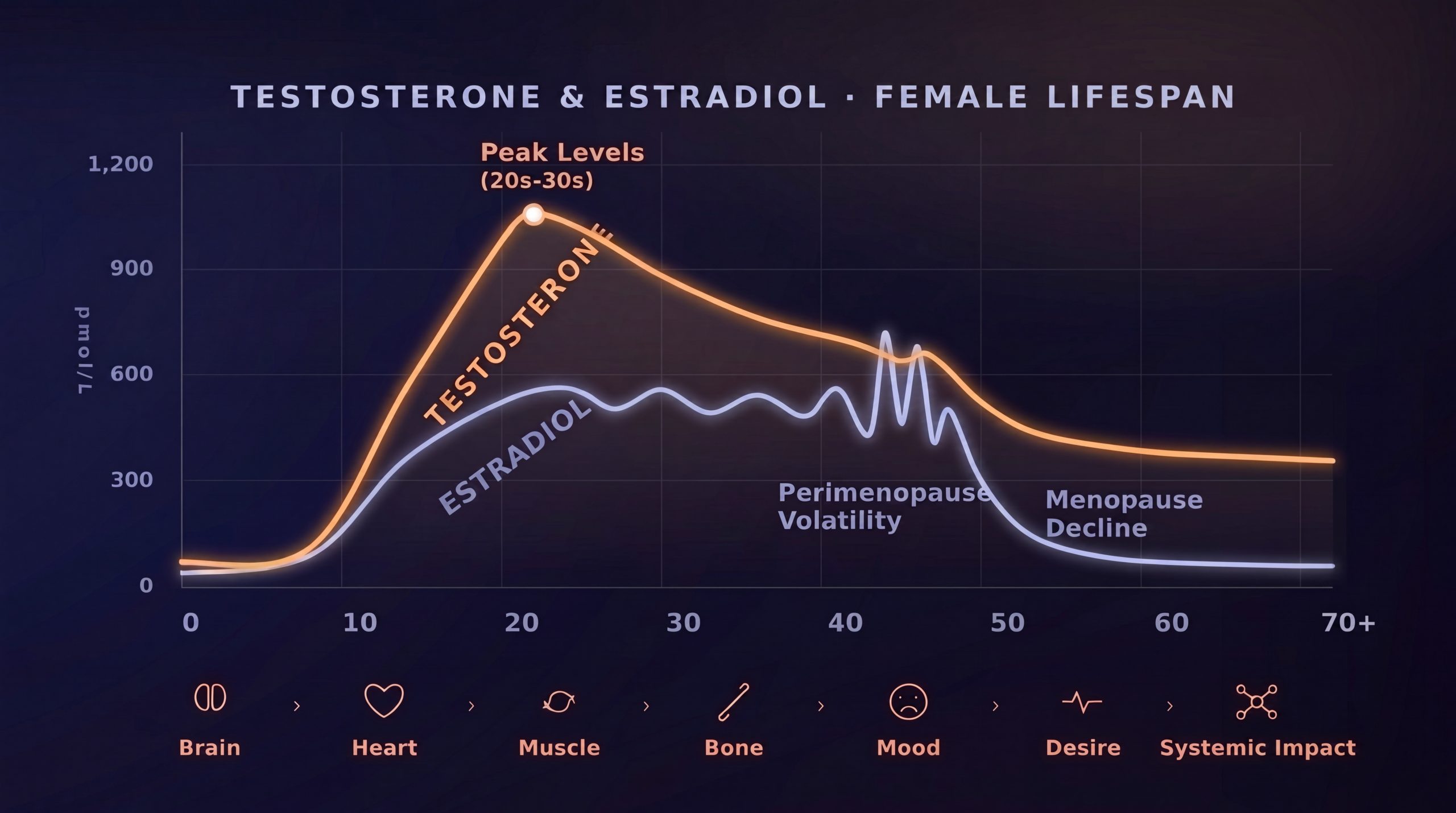
Testosterone Changes Throughout a Woman’s Life
Testosterone production rises during puberty, reaches its highest levels in early adulthood, and then gradually declines as a woman ages. Unlike estrogen—which may fluctuate dramatically during perimenopause before falling more sharply around menopause—testosterone typically follows a slower, more progressive decline beginning much earlier in adulthood.
By the time many women reach their 40s, their testosterone levels may be substantially lower than they were in their 20s. Surgical removal of the ovaries can produce an even more abrupt decline because the ovaries are an important source of female testosterone.
This gradual change can make testosterone-related symptoms difficult to recognize. There may be no single moment when everything suddenly feels different. Instead, a woman may slowly notice that she has less energy, less motivation, more difficulty maintaining muscle, less interest in intimacy, or a growing sense that she no longer feels quite like herself.
When “I’m Fine” No Longer Feels True
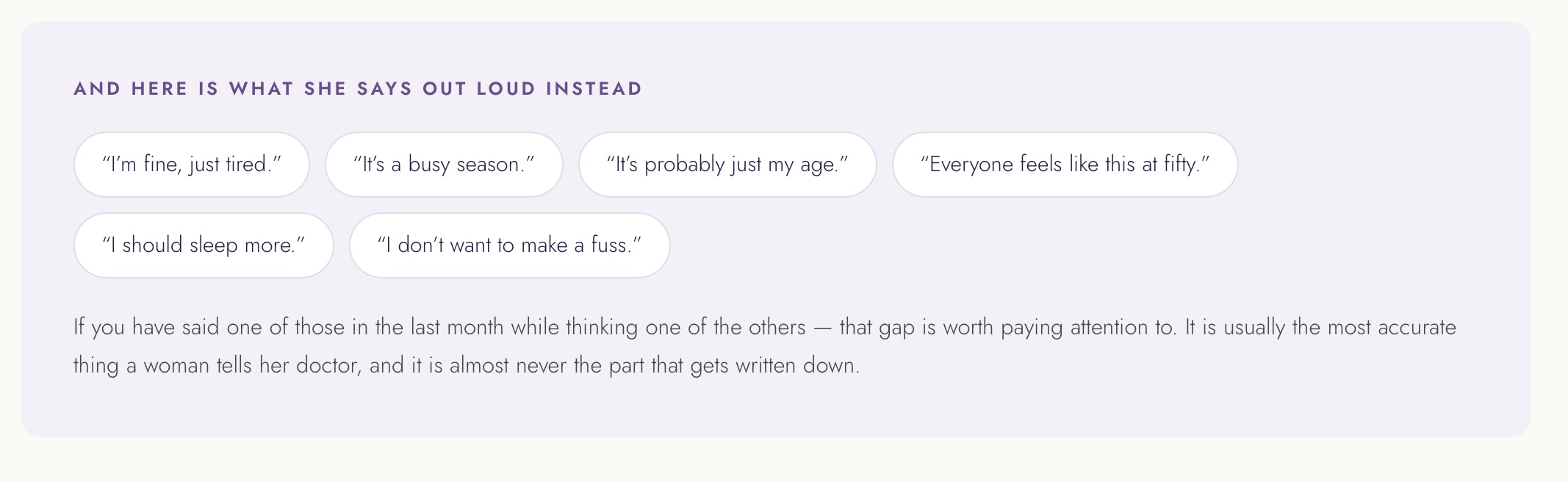
Many women continue meeting every obligation while quietly feeling unlike themselves. They are still working, caring for their families, managing full schedules, and pushing through—but with less energy, less resilience, and less access to the vitality or sexuality they once took for granted.
Changes that may prompt a testosterone evaluation include:
- A meaningful decline in sexual desire
- Fewer spontaneous sexual thoughts
- More difficulty becoming aroused or reaching orgasm
- Reduced pleasure or responsiveness during intimacy
- Persistent fatigue or diminished stamina
- Loss of motivation, drive, or emotional resilience
- Difficulty maintaining lean muscle and strength
- Changes in memory, concentration, or mental clarity
- A broader feeling of “I just don’t feel like myself”
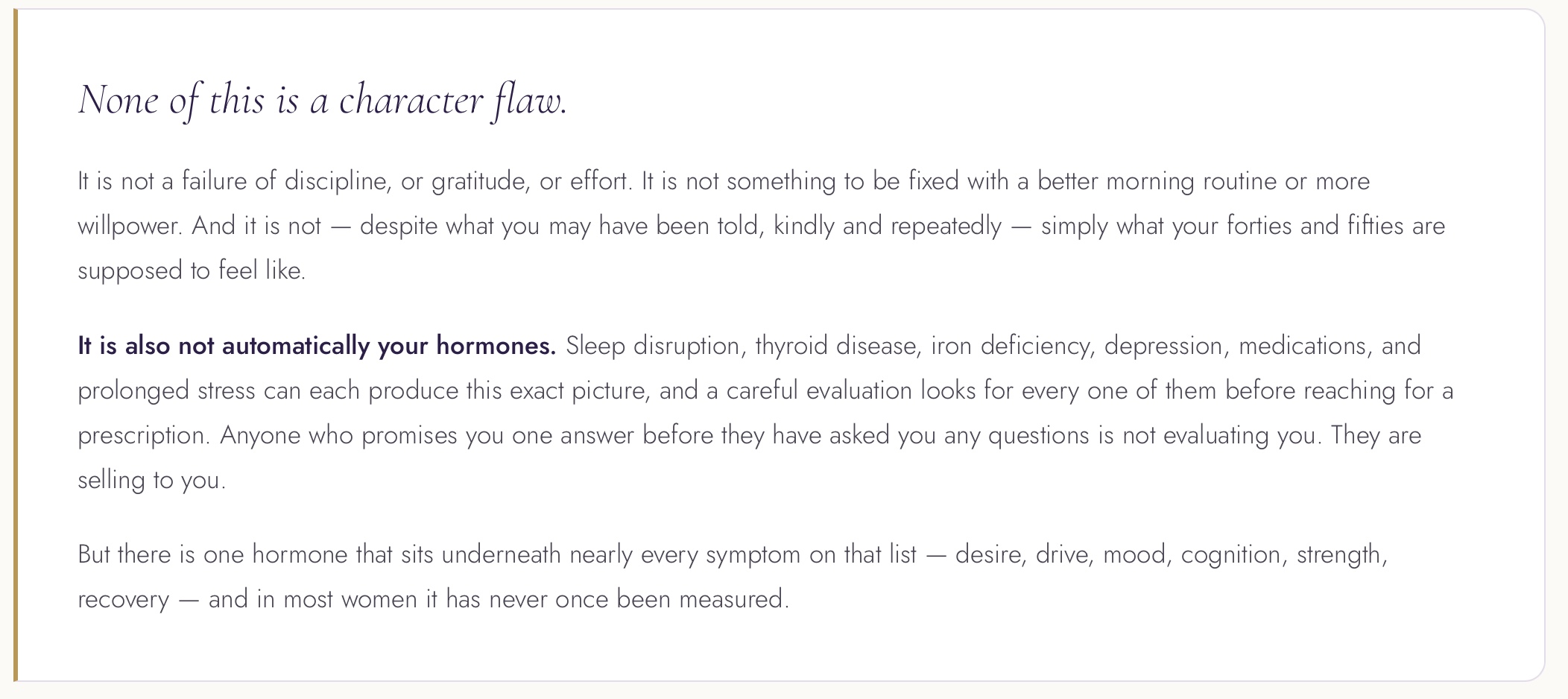
Other contributing factors to be considered include thyroid dysfunction, iron deficiency, disrupted sleep, chronic stress, depression, medications, estrogen deficiency, and relationship factors. That is why responsible hormone care begins with a thoughtful evaluation—not a symptom checklist alone.
At Renew MediSpa, Dr. Lisa Vuich provides physician-led testosterone evaluation and individualized hormone care for women in New Hampshire.
The goal is not to convince every woman that she needs testosterone.
It is to determine whether testosterone may be one meaningful part of a much larger clinical picture—and to help you make an informed decision based on symptoms, history, laboratory data, goals, and ongoing monitoring.

The content of this website is intended to be general information- it should not be used to diagnose or treat a medical condition, and is in no
way meant to be a substitute for seeking appropriate medical care.
