
Non-Surgical Treatment for Female Urinary Incontinence
Regain Bladder Control
Restore Confidence
Improve Quality of Life

YOU ARE NOT ALONE
Urinary incontinence affects millions of women and is far more common than most people realize. While it becomes increasingly prevalent after pregnancy, childbirth, and menopause, bladder leakage is not simply an inevitable part of aging—and it is certainly not something you should feel embarrassed to discuss.
Many women quietly adapt their lives around their symptoms. They wear protective pads, avoid exercise, stop laughing freely, map out the nearest restroom wherever they go, or decline social activities because they worry about having an accident. Others begin limiting intimacy because they no longer feel confident or comfortable.
Unfortunately, many women assume these changes are simply “part of getting older” or that surgery is their only option. Neither is necessarily true.
For many women, the journey to treating urinary incontinence begins in their primary care provider’s office, gynecologist’s office, or with a urogynecologist. Depending on the type and severity of your symptoms, you may have already been advised to try one or more conventional treatment options.
While these approaches can be very effective for some women, others continue to experience bothersome bladder leakage despite their best efforts. At Renew MediSpa, we frequently meet women who are looking for additional non-surgical options because they are still struggling with symptoms or simply wish to avoid more invasive procedures.


Recognized for Excellence in Women's Pelvic Health Renew MediSpa is honored to be recognized as an InMode EmpowerRF Top Provider, reflecting our experience with one of the most comprehensive non-surgical platforms available for treating urinary incontinence, vaginal rejuvenation, and female intimate wellness.
WHY IT HAPPENS
Urinary incontinence is not a disease—it is a symptom. Understanding why it develops is the first step toward choosing the most effective treatment.
Healthy bladder control depends on a complex interaction between the pelvic floor muscles, connective tissues, nerves, hormones, and the bladder itself. When one or more of these systems weaken or change over time, bladder leakage can occur.
Common contributors include:
Pregnancy and Childbirth
Pregnancy places tremendous stress on the pelvic floor muscles and supporting tissues. Vaginal delivery can further stretch or injure these structures, leading to stress urinary incontinence years later.
Menopause
As estrogen levels decline, vaginal tissues become thinner, collagen production decreases, and the supporting structures around the bladder gradually weaken.
Aging
Over time, collagen, elastin, muscle mass, and tissue elasticity naturally decline, reducing the bladder’s support system.
Pelvic Floor Muscle Weakness
The pelvic floor muscles act like a hammock supporting the bladder and pelvic organs. When these muscles weaken, leakage during coughing, laughing, sneezing, or exercise becomes more common.
Previous Pelvic Surgery or Trauma
Certain surgeries or pelvic injuries can alter support structures and contribute to bladder symptoms.
Lifestyle Factors
Chronic coughing, obesity, constipation, repetitive heavy lifting, and high-impact exercise may increase pressure on the pelvic floor over many years.
WHERE RENEW MEDISPA FITS
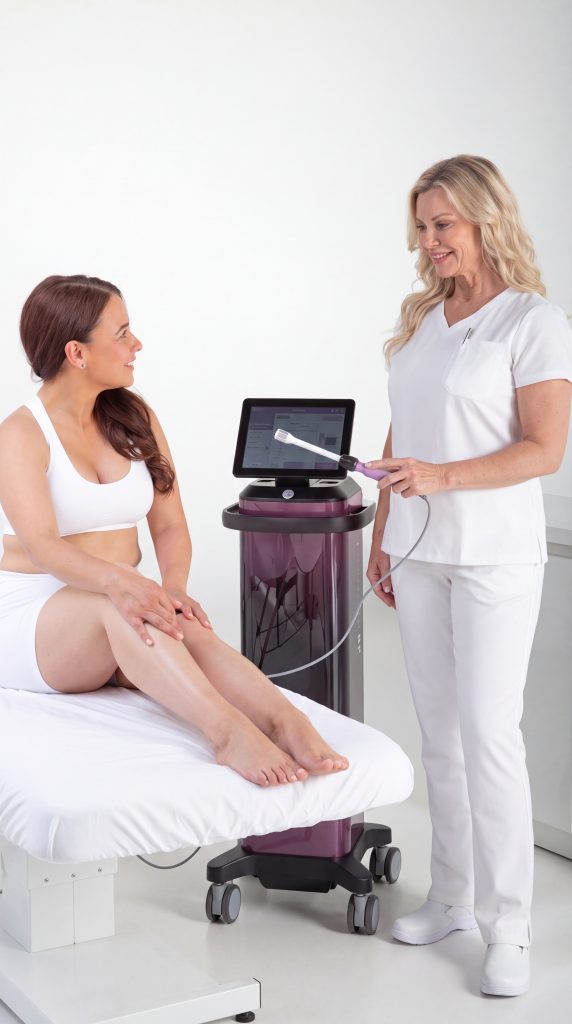
Our goal is not to replace traditional medical care but to expand the range of non-surgical treatment options available to women- especially those who have tried and failed the usual initial treatment approaches such as Pelvic Floor Physical Therapy, Oral Medications and Kegel Exercises. We evaluate each patient individually and often recommend therapies that complement—not compete with—conventional treatments.
Rather than relying on a single technology, we focus on the underlying factors contributing to urinary incontinence, including:
- Pelvic floor muscle weakness
- Loss of collagen and connective tissue support
- Vaginal tissue laxity
- Age-related changes associated with menopause
- Reduced tissue blood flow and regenerative capacity
More Than Bladder Control
Female pelvic health is complex, and urinary incontinence is often just one symptom of age-related changes affecting the pelvic floor and vaginal tissues. Many of our regenerative and energy-based therapies are designed not only to strengthen pelvic support but also to improve vaginal tissue quality, stimulate collagen remodeling, enhance circulation, and promote healthier, more resilient tissue. As a result, many women experience improvements in vaginal comfort, lubrication, and sensation in addition to better bladder control—allowing us to address multiple aspects of intimate wellness through a personalized, non-surgical treatment plan.
Why Women Choose Renew MediSpa for Intimate Wellness
At Renew MediSpa, you'll benefit from:
Physician-Led Care:
Every treatment plan is developed under the direction of Dr. Lisa Vuich, an experienced physician with extensive expertise in regenerative medicine and female intimate wellness. Dr. Vuich regularly lectures and trains physicians throughout the United States in regenerative and aesthetic medicine, remaining at the forefront of emerging technologies and treatment protocols.
One of New Hampshire's Most Comprehensive Technology Platforms:
Rather than offering only one device, we provide multiple complementary technologies that allow us to customize treatment based on your symptoms and goals.
Personalized Combination Therapy:
We believe successful treatment begins with understanding why your symptoms developed—not simply selecting a procedure.
ns with understanding why your symptoms developed—not simply selecting a procedure.
Renew MediSpa has been a leader in non-surgical female intimate wellness in New Hampshire since 2015.
We were among the first practices in the state to introduce advanced vaginal rejuvenation technologies, beginning with ThermiVa® and FemiWave®, and have continued to expand our treatment options with the EmpowerRF platform, including FormaV®, Morpheus8V®, and VTone®.
Rather than focusing on a single symptom, our approach addresses the underlying changes that commonly occur after pregnancy, childbirth, menopause, and aging. Depending on your individual needs, treatment may strengthen weakened pelvic floor muscles, stimulate collagen and elastin production, improve blood flow, restore healthier vaginal tissue, and support the body's natural regenerative processes.
The result is a personalized, non-surgical treatment plan designed not only to improve bladder control, but also to enhance vaginal tissue health, comfort, support, and overall intimate wellness. Because many of these therapies target multiple aspects of pelvic health simultaneously, women often experience improvements in more than one concern with the same treatment plan.
MANY CONDITIONS CAN BE TREATED SIMULTANEOUSLY
Stress Urinary Incontinence
Overactive Bladder- Urge Incontinence
Vagina Laxity (Looseness)
Decreased Sensation/Difficulty Achieving Orgasm
Loss of Libido
Vaginal Dryness and Painful Intercourse
Atrophic Vaginitis- itching, burning, fissures, pain due to vaginal lining atrophy
Lichen Sclerosus
External skin laxity
Enlarged Labias

URINARY INCONTINENCE HAS PROFOUND IMPACT ON A WOMAN'S QUALITY OF LIFE
Skin Infections- Fungal and Bacterial
Urinary Tract Infections
Skin Irritation / Dermatitis
Avoidance of Exercise
Avoidance of Social Activities
Increased Risk of Anxiety and Depression
Reduced Libido and Reduced Sexual Satisfaction
Feeling Old, Unattractive, Less Confident
Treatment Options: Your Customized Plan
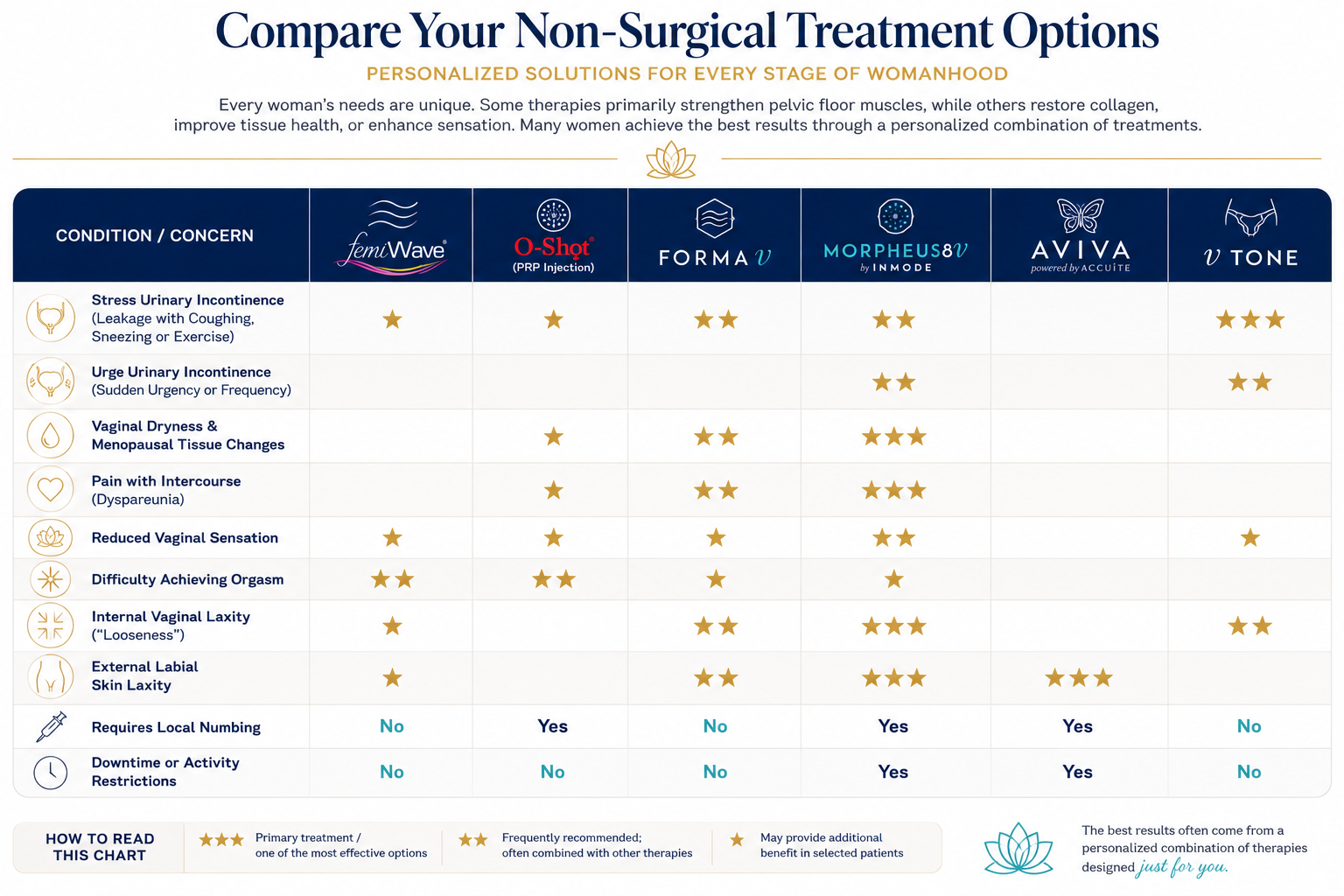
Every woman's symptoms—and the reasons behind them—are unique. Rather than recommending the same treatment for everyone, we carefully evaluate the specific factors contributing to your concerns and develop a personalized treatment plan designed around your individual needs. The comparison chart below summarizes the primary strengths of each therapy and the conditions they most commonly address. You'll notice that many treatments provide benefits beyond a single symptom. For example, a therapy recommended for stress urinary incontinence may also improve vaginal tissue health, collagen support, or sensation. Because urinary incontinence and intimate wellness concerns often have multiple contributing factors, the best results are frequently achieved by combining complementary therapies rather than relying on a single treatment. During your consultation, Dr. Lisa Vuich will help you understand your options and recommend the treatment—or combination of treatments—that offers the greatest potential benefit for your specific goals.

RECOVERY FROM YOUR PROCEDURE
Patients usually notice improvement within two weeks after their first treatment, but the full results will evolve over the course of several months.
Results are very long lasting, with most clients requiring just an occasional maintenance session to maintain their benefits.
There is no substantial downtime associated with these procedures, though some will require that there be a period of time when nothing is inserted into the vagina soon afterwards. There is no issue with return to work or exercise.
FAQ’s
While urinary incontinence becomes more common with age, it is not considered a normal or inevitable part of aging. Pregnancy, childbirth, menopause, pelvic floor muscle weakness, collagen loss, and certain medical conditions can all contribute to bladder leakage. Fortunately, many women experience significant improvement with appropriate treatment.
Female urinary incontinence often develops from a combination of factors rather than a single cause. Pregnancy and childbirth can weaken the pelvic floor muscles, while menopause and aging contribute to collagen loss and reduced tissue support around the bladder and urethra. Lifestyle factors, chronic coughing, obesity, previous pelvic surgery, and certain medical conditions may also play a role. Identifying these contributing factors helps us recommend the most appropriate treatment plan.
- Stress Urinary Incontinence- involuntary leakage of urine during physical activity: Jumping, laughing, coughing, sneezing, bending over
- Urge Incontinence- “Overactive Bladder”-the urgent, uncontrollable need to pee several times during the day and night. You may leak urine before you get to the bathroom.
- Mixed Incontinence- Both types are present
Your medical providers may have you trial various therapies including:
Kegel exercises
Timing your trips to the bathroom
Losing excess weight
Avoiding caffeine
Pelvic Floor Physical Therapy
Intra-vaginal estrogen Rx
Surgical referral for possible bladder suspension, sling or mesh insertion
There are some oral medications which have been used over the years, but they tend to have bothersome side effects so they are not a popular solution.
When traditional therapies fail, and you are left worrying about accidents, avoiding social situations, and wearing pads or diapers, it’s time to contact the experts at Renew MediSpa to explore alternative therapies.
Most regenerative and energy-based treatments for urinary incontinence and vaginal rejuvenation are elective procedures and are not covered by insurance.
cost can however be covered by funds set aside in Heath Savings Accounts (HSA) or Flex Spending Accounts (FSA) which may be available through your employer.
We do not bill insurance (we are not providers with any insurance carriers) but we can usually process HSA and FSA payment cards and provide any documentation you may need to submit to support the expenditure.
Financing options may be available, and we’ll review all costs with you before treatment begins.
Yes we have financing options available. Contact us to learn more!
The procedures performed at Renew MediSpa are generally completed in under an hour. V Tone sessions are completed in 20 to 30 minutes. Some of our other procedures such as Morpheus8 V will take longer due to the time required for numbing. We will meet with you to come up with a treatment plan, and let you know what time will be needed for each intervention.
This can be estimated during a consultation and varies by procedure. V-Tone or FemiWave sessions are usually done in an initial series of 6, followed by an occasional maintenance session as needed. Our other vaginal rejuvenation procedures are often completed in a series of 3.
Yes, all of our equipment has been cleared for use by the FDA.
Vaginal rejuvenation procedures at Renew MediSpa are primarily performed by our trained female RNs. Some of the procedures may also be performed by Dr. Vuich. We have been performing these procedures successfully since 2015.
These procedures are very well tolerated. Topical numbing cream is used for Morpheus8V and for PRP injections. No pain medication is required before, during or after these procedures.
A consultation is recommended in order for us to make the best recommendation regarding your treatment plan. We will base our recommendation on the type of symptom(s) you are experiencing and the severity of the symptom(s), and your history of past treatments/interventions. In some cases you will have more than one treatment option available to you, or a combination of procedures may be recommended. The Sexual Wellness consultation can be booked with an RN or medical assistant. If you live over an hour from our location, we may be able to accommodate phone consultations as well.
Primary contraindications include:
Pregnancy
Active malignancy or receiving chemotherapy
Active infection in the treatment zone
Active MESH complication
Pacemaker or Implanted Defibrillator is a contraindication for radiofrequency-based procedures.
Uterine prolapse- not an absolute contraindication but it will not improve with our treatments.
Noticeable improvement can begin as early as 1 weeks after a regenerative procedure, and continue to improve for up to 3 months.
It is very important in this instance that you have been evaluated by a gynecologic specialist if you have significant vaginal/pelvic pain. Not all causes of pelvic pain are treatable with vaginal rejuvenation. If the cause of the pain is vulvovaginal atrophy (most commonly due to postmenopausal changes) then we have excellent treatment options available! What we cannot say is exactly how many sessions will be required in order for you to be feeling “back to normal” or better. In our experience, treatment failures are rare.
This will vary of course, but in general vaginal rejuvenation procedures are recommended to be performed yearly. Pelvic Floor Muscle stimulation may require a maintenance procedure more often- it all depends on the severity of your issues. Maintenance procedures help to retain the tissue health and prevent symptom recurrence. Many of our women’s wellness clients schedule their maintenance procedure the way you would schedule a yearly physical exam. Others prefer to “wait until symptoms begin to return” before booking a booster procedure.
Hormone replacement is not required for our interventions to work. However, optimizing hormones could potentially help your results last longer.
Many of our patients come to us after trying traditional first-line treatments with limited improvement. Depending on the underlying cause of your symptoms, advanced technologies such as VTone®, FormaV®, Morpheus8V®, PRP, or FemiWave may provide additional treatment options. During your consultation, we’ll discuss which therapies may be appropriate for your individual situation.
Urinary incontinence is rarely caused by a single problem. Some women primarily have weakened pelvic floor muscles, while others have collagen loss, menopausal tissue changes, vaginal laxity, or reduced blood flow. Each treatment targets different aspects of pelvic health, which is why combination therapy often provides the most comprehensive results.
Yes. Several of the therapies we offer provide benefits beyond bladder control by stimulating collagen production, improving circulation, strengthening pelvic support, and enhancing vaginal tissue quality. Depending on the treatment selected, women may also notice improvements in vaginal dryness, tissue elasticity, comfort during intimacy, and overall sexual wellness.
The recommended number of treatments depends on your symptoms, the therapies selected, and your treatment goals. Some procedures are performed as a series of treatments, while others may be repeated periodically to maintain results. Your personalized treatment plan will be discussed during your consultation.
Many women begin noticing improvement within several weeks, while collagen remodeling and tissue regeneration continue over the following months. Results vary depending on the treatment performed and the severity of your symptoms.
Results vary from person to person and depend on factors such as age, hormone status, lifestyle, and the treatment performed. Because the natural aging process continues, periodic maintenance treatments are often recommended to help preserve your results.
Disclaimer: Individual results will vary by person and are based upon patient variables (such as genetics, age and lifestyle), the severity of the condition before the procedure, the procedure(s) chosen, and compliance with any recommended aftercare program. No one can guarantee an exact outcome for any aesthetic or regenerative procedure.
The content of this website is intended to be general information- it should not be used to diagnose or treat a medical condition, and is in no way meant to be a substitute for seeking appropriate medical care.
